You're here because the homepage felt too good to be true.
Fair. Here's the work, and here's exactly how the trust-based delivery actually works. Take your time.
Live client work
Real businesses. Real sites. Shipped.
A selection of recent work. Click any to open the live site.
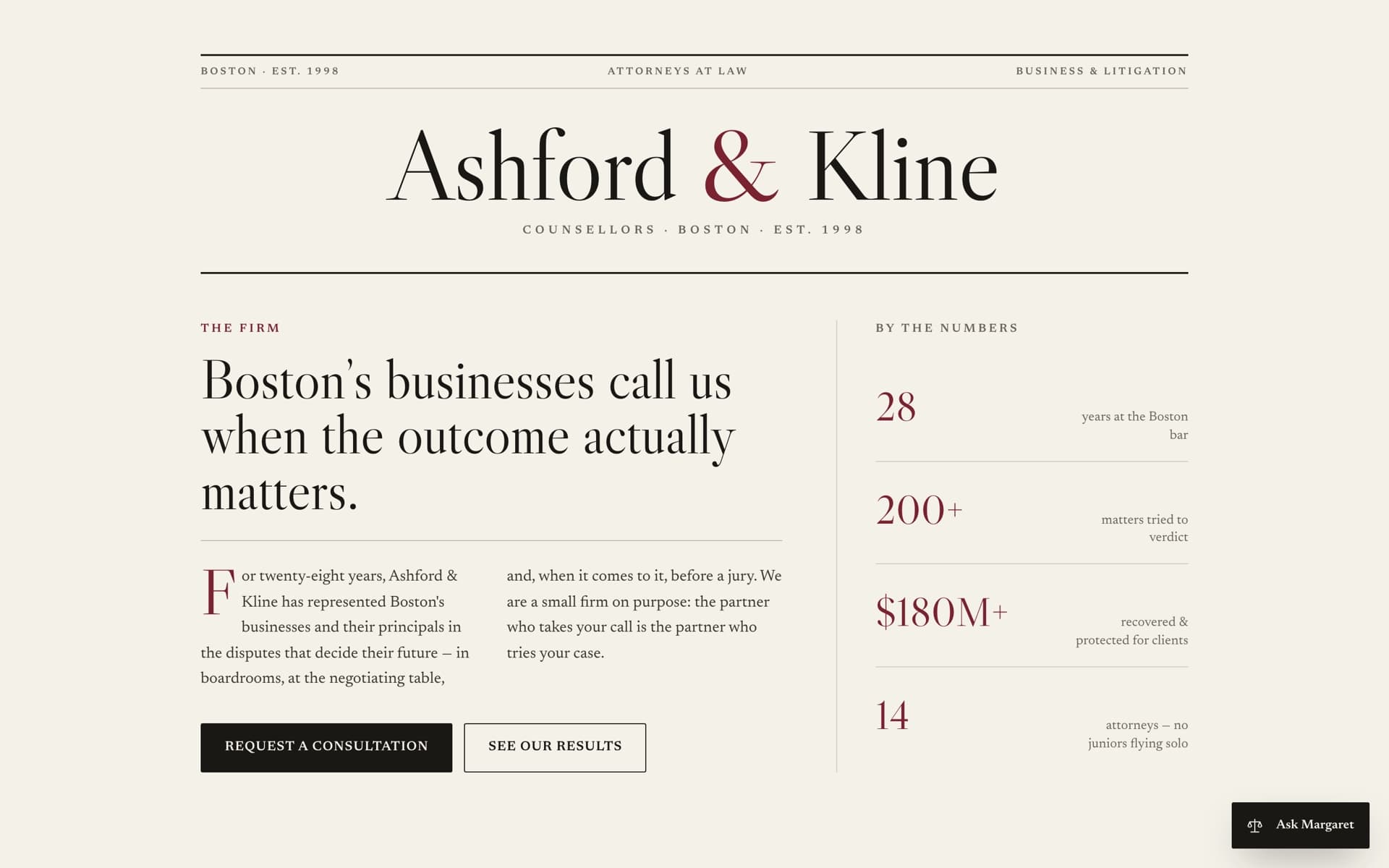
Ashford & Kline
Law firm · Boston
Boutique litigation and corporate firm — a numbered case-results ledger, scroll-driven film, and a confidential AI intake coordinator.
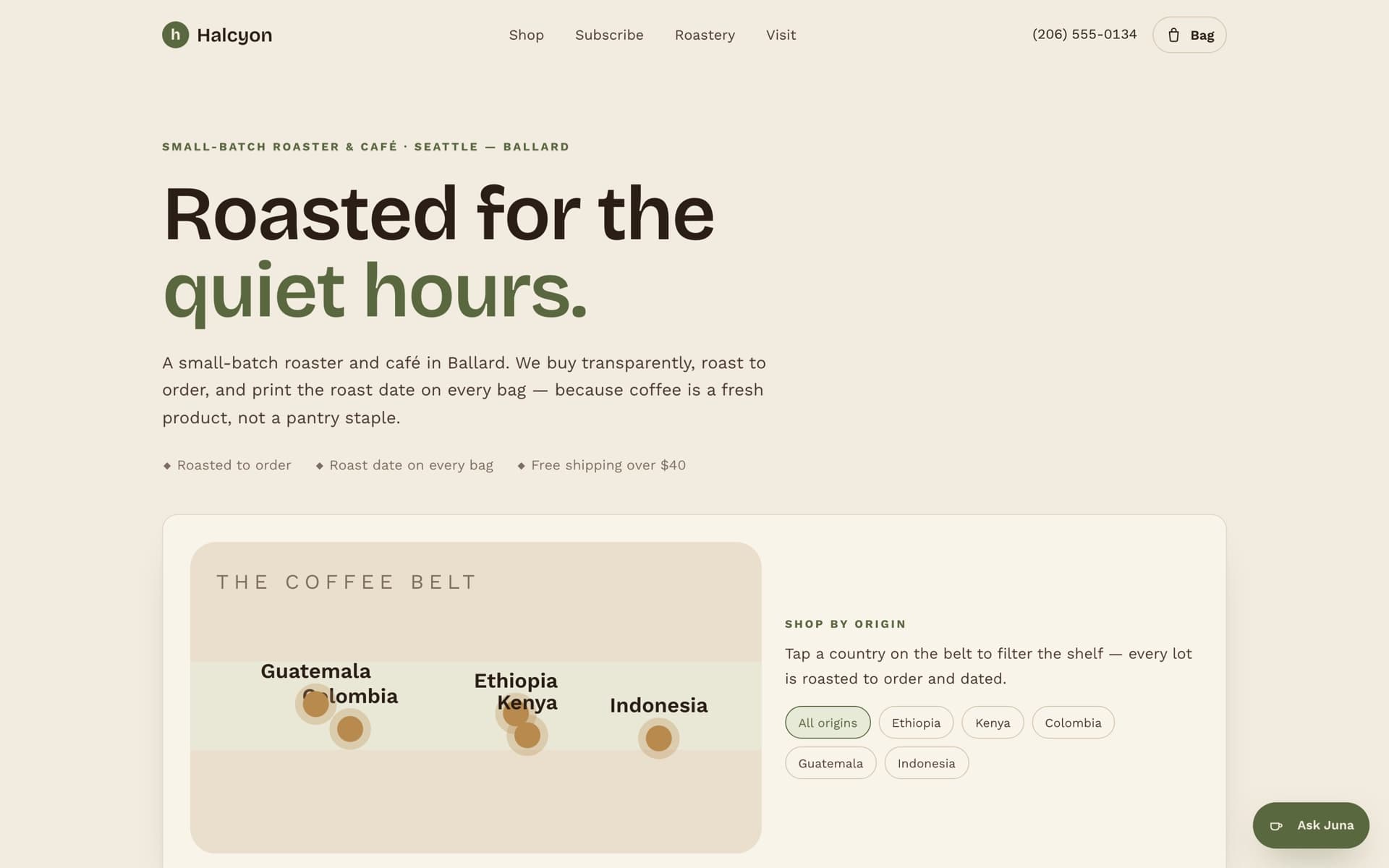
Halcyon Coffee Roasters
Coffee roaster · Seattle
Small-batch roaster and café — shop by origin on an interactive coffee belt, subscriptions, and an AI barista who dials in your brew.
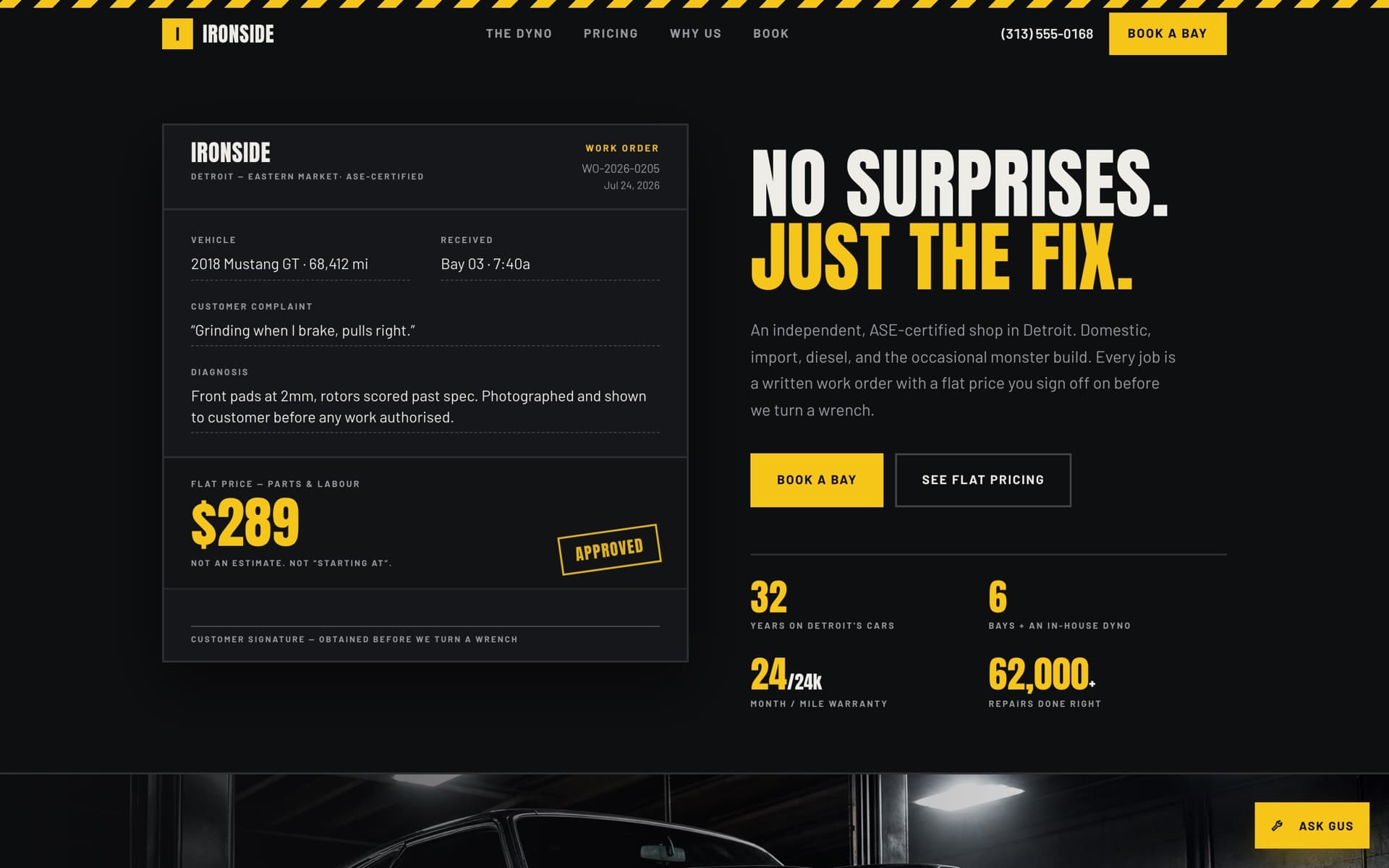
Ironside Auto Works
Auto repair · Detroit
Independent ASE-certified shop — flat-rate work orders, a scroll-scrubbed dyno power curve, and an AI service writer that books bays.
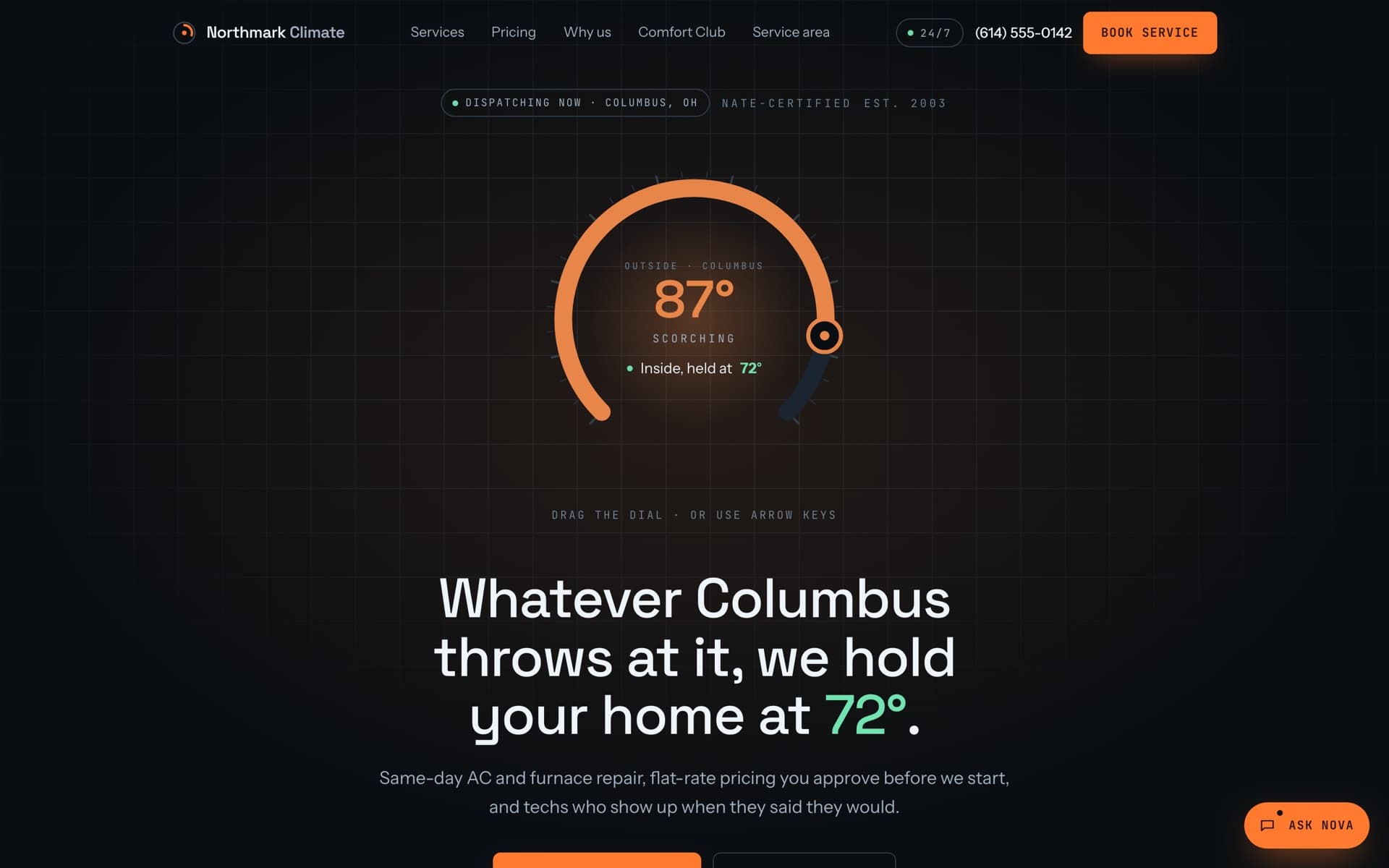
Northmark Climate
HVAC · Columbus
Heating and cooling company — emergency dispatch, membership plans, and an AI agent that takes no-heat calls around the clock.
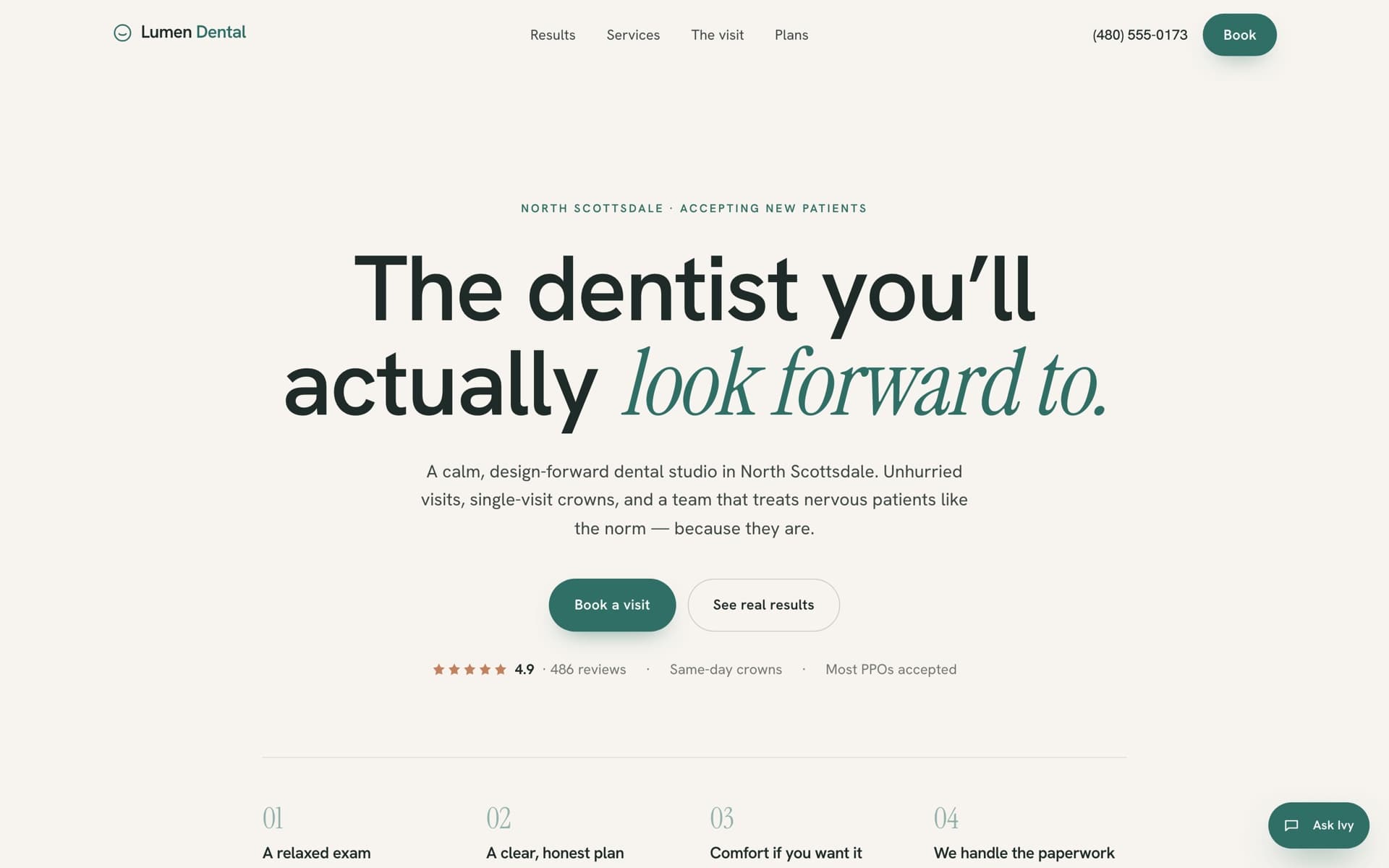
Lumen Dental Co.
Dental practice · Scottsdale
Modern dental practice — treatment explainers, transparent pricing, and an AI front desk that books after-hours patients.
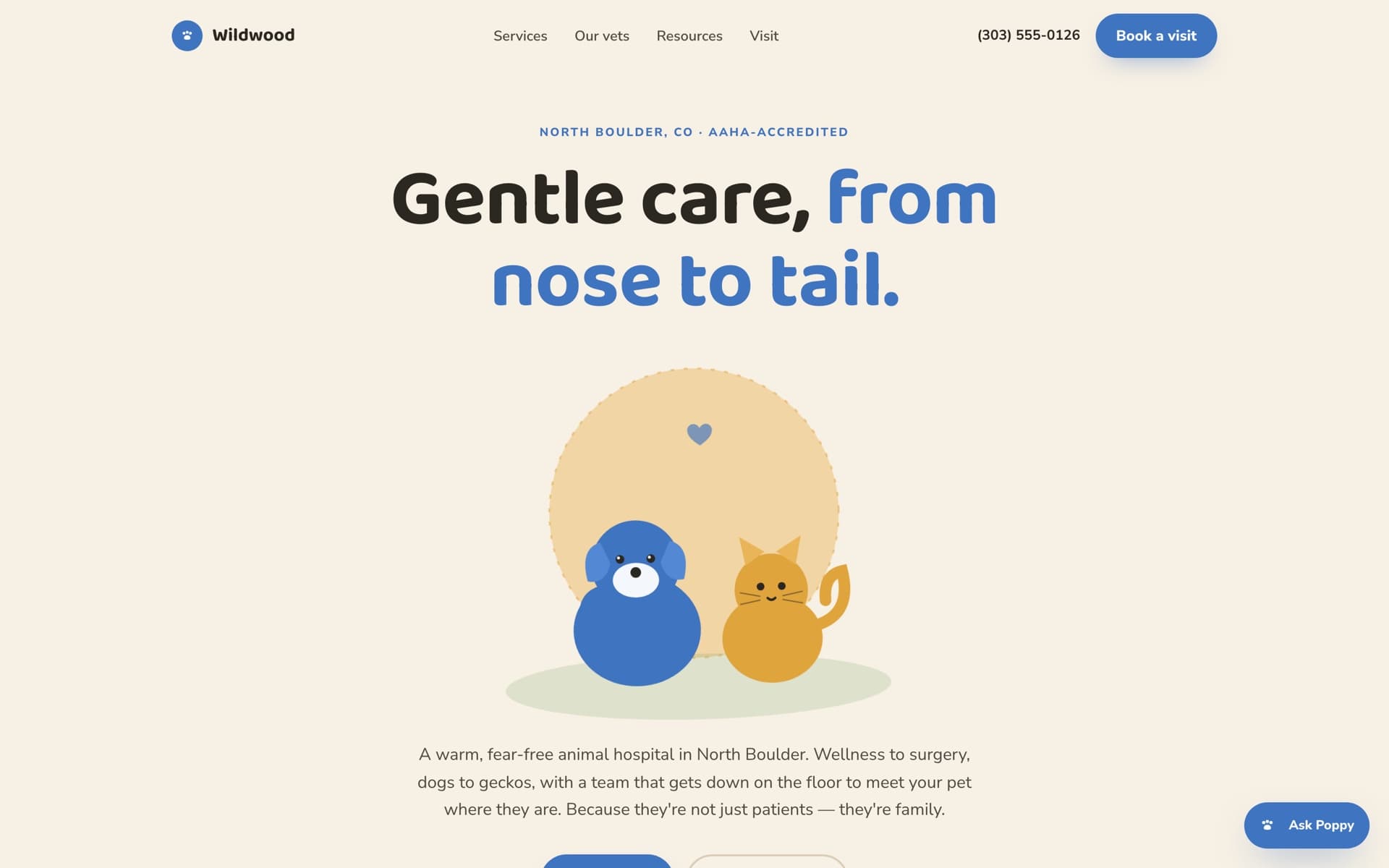
Wildwood Animal Hospital
Veterinary · Boulder
Neighbourhood animal hospital — services, care guides, and an AI agent that triages worried pet owners and books visits.
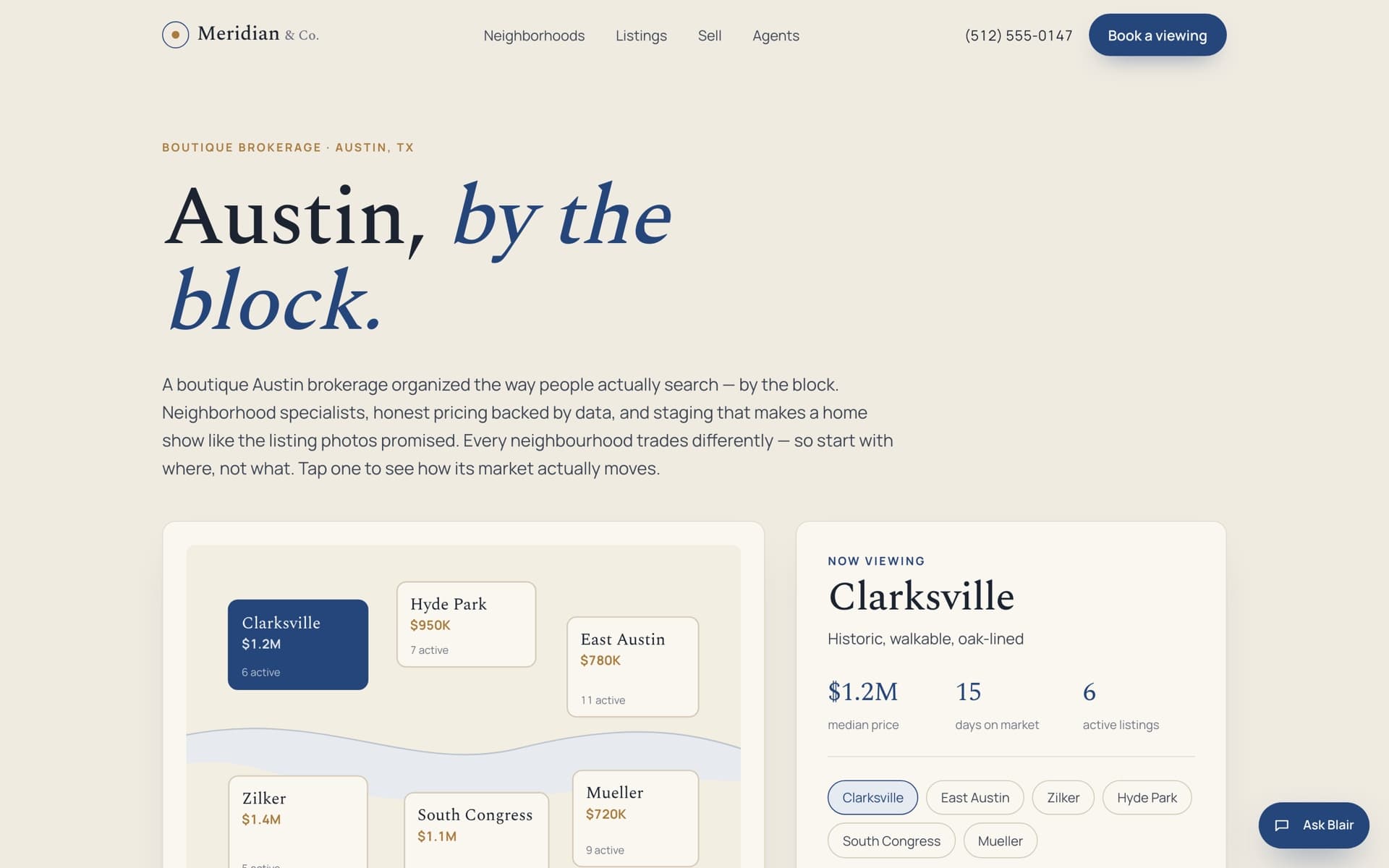
Meridian & Co.
Real estate · Austin
Boutique brokerage organised by the block — an interactive neighbourhood index, live listings, and an AI concierge for valuations.

Ember & Oak
Restaurant · Asheville
Wood-fired kitchen — a living menu, table reservations, and an AI host that takes bookings while the pass is slammed.
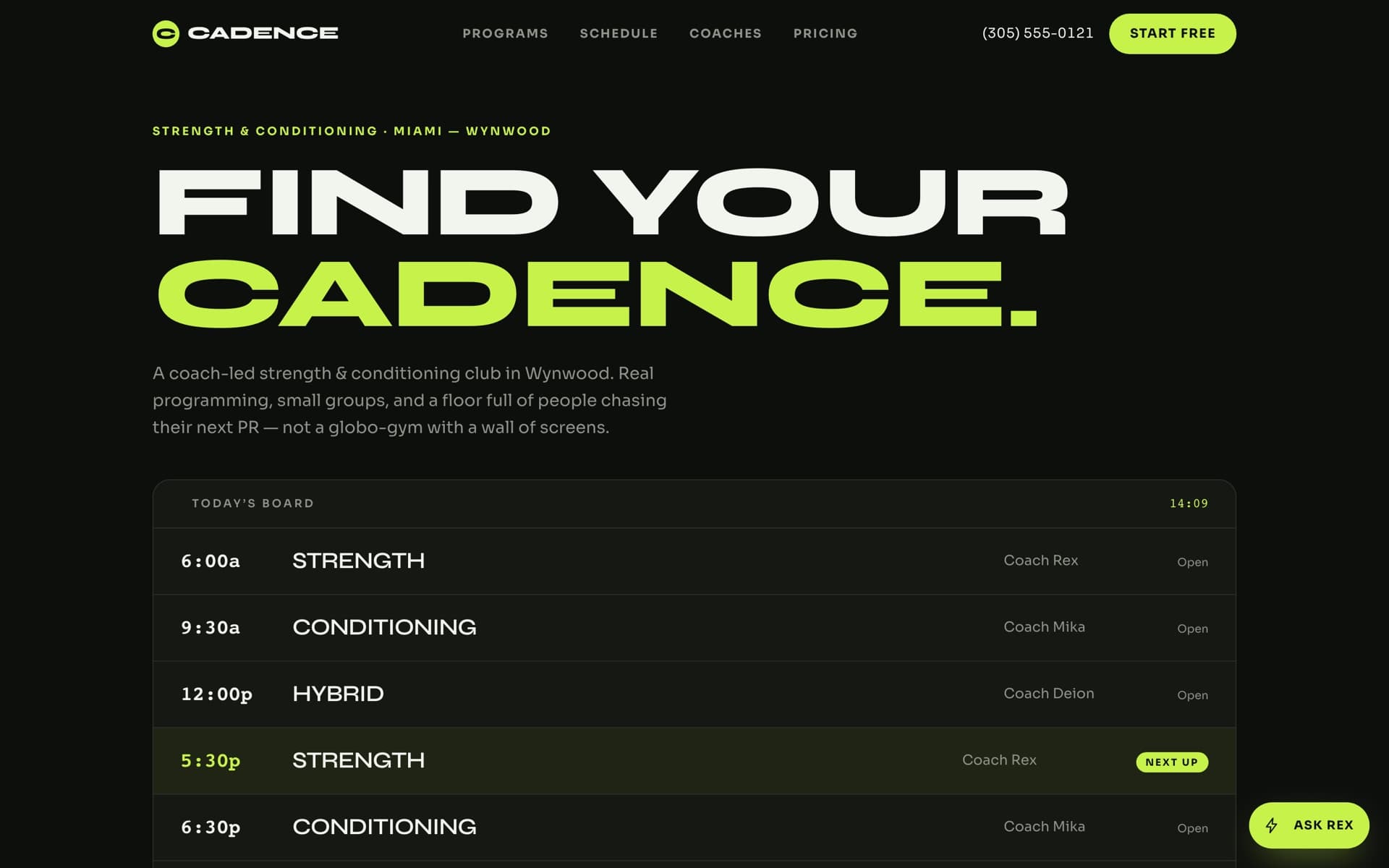
Cadence Strength Club
Strength gym · Miami
Coach-led strength club — horizontal-scrolling programmes, the class board, and an AI front desk that books free sessions.
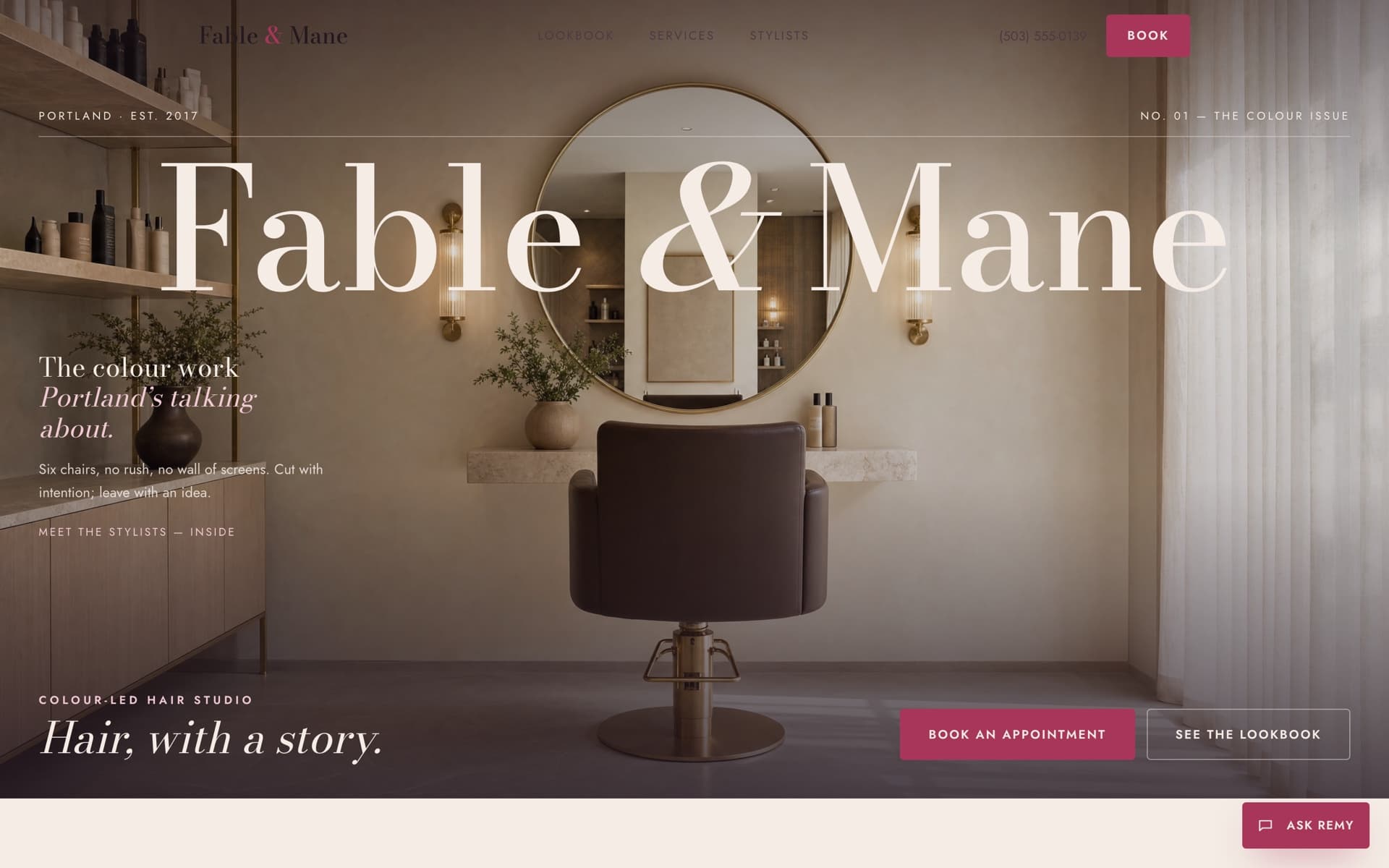
Fable & Mane
Hair salon · Portland
Editorial hair salon — stylist portfolios, service menu, and an AI receptionist that fills the empty chair.
The numbers we can prove.
No invented statistics. Just what answering your phone actually costs today, from named public sources, with our plain reading of each.
A full-time receptionist in the US costs about that in base wages alone, at the $17.90/hour national median.
And that is before payroll taxes, benefits, holidays and sick cover, which typically push it past $3,900. A person also works one shift, not nights and weekends.
US Bureau of Labor Statistics (Occupational Outlook Handbook, receptionists) · May 2024What a human answering service charges at entry level. Ruby's cheapest plan is $250 for 50 handled minutes a month.
Fifty minutes is under two minutes a day. Run out and every extra minute is billed. Those services take a message; they do not book into your calendar or answer at 2am.
Ruby · 2026Where UK phone answering starts, for appointment scheduling, with per-minute charges above a small included allowance.
The entry price is low, but it is a floor, not the all-in cost. Real spend climbs with call volume, and cover is still limited to staffed hours.
ReceptionHQ (UK) · 2026That is the gap we fill: done-for-you, always answering, at a fraction of a person's cost. We do not claim what you'll earn from it, only what the alternative costs. The rest you can judge from the work above.
Trust-based delivery, explained
How it works and why it works.
Why does this exist?
Most agencies need a deposit because their work is worth less than what they charge for it. Without the deposit, the client would see the work and refuse to pay full price.
We don't need a deposit because our work is worth more than what we charge for it. When you see it, you'll want to pay.
That's the entire model. The deposit exists in traditional agencies to protect the agency from client regret. We eliminated the regret instead.
How does it actually work?
- 1.
You fill out the intake form.
Specifically what we need is in the form itself — the questions cover scope, references, deadlines, and constraints. The intake form is the legal source of truth for everything we build. Takes about 10 minutes.
- 2.
We build the thing.
No discovery call. No scope document. No weekly status meetings. We just build it. Depending on the tier, this takes 3 to 35 days. You don't hear from us during the build unless we have a real question about something in the intake form.
- 3.
We send you a private preview link.
You get a secure link at preview.deeplathe.com with an access code. The finished product is live, working, and deployed. You test it yourself, on your own time. Usually takes 10–15 minutes to review.
- 4.
You decide.
If the work is what you wanted and worth what we charge, you reply with "approved" and we send the invoice. If something is off, you tell us what's off and we fix it within the original scope. If you don't want the work for any reason, you say "not for me" and we walk away. No invoice, no bad feelings, no phone call.
- 5.
You pay (only if you approved).
Stripe invoice, 7-day terms. Your subscription starts and we host, run and maintain everything — nothing for you to set up. Owning a website outright is available on request. It goes live as soon as the first invoice is paid.
What if I don't pay?
Legally
The work remains property of Deeplathe until paid. Using it constitutes acceptance and creates a payable obligation. We don't litigate it because litigation across borders is more expensive than the work itself. The deterrent isn't legal — it's the next point.
Practically
We absorb the loss within our forecasted non-payment rate — built into the financial model at about 20% of clients in the trust-based phase. It's a real cost but it's a planned cost. We're not running on the assumption that everyone pays. We're running on the assumption that enough people pay that the model still works after the losses.
Why we built it this way anyway
The buyers who would steal the work are also the buyers who would haggle over a deposit, demand revisions outside scope, threaten chargebacks, and post negative reviews if anything went wrong. By making payment optional, we filter out exactly the buyers who would have been painful customers anyway. The losses we eat are losses we'd have had in support hours, refund disputes, and brand damage under a normal deposit model. The math works out.
Why it's not a scam in reverse
We could in theory build worse work knowing we won't always get paid. We don't, because the work has to be good enough that mostpeople pay, and bad work is bad for the long-term referral network we're building. The incentive structure is aligned: do good work, get paid most of the time, build a reputation, attract better clients over time.
What changes after the first 100 clients?
1. Pricing stays flat — nothing changes
Everything is a flat subscription: one fixed monthly that never goes up, plus a one-time setup fee. There's no introductory rate that expires and no deadline to beat — the price you sign up at is the price you keep. It's month-to-month with no lock-in, and paying annually (twelve months up front) waives the setup fee entirely. The monthly bundles hosting, SSL, backups, monitoring, your domain, and business email, so a traditional agency's separate build, retainer, and hosting bills collapse into one predictable line.
2. Deposit structure changes
Starting at client 101, a 20% deposit is required upfront. The deposit unlocks the intake questionnaire and reserves your build slot. Starting at client 1,101, the deposit increases to 50%. The remaining balance is still due on approval. The reason: at scale, we cannot personally absorb non-payment losses across hundreds of clients. The deposit is a quality filter, not a power move.
Quick reference — flat pricing (monthly + one-time setup)
From start to finish
How each product gets built
Select a product type to see exactly what happens between your intake form and the finished product.
You submit the intake form
Tell us your business, who your customers are, what pages you need, any reference sites you like, and your deadline. That's it.
INTAKE FORM
Business name
Bayside Family Dental
What do you need?
Website
Description
Reference sites
After the build: Care, Operate, or Scale.
Most agencies hand over a project and disappear. We don't. Every project comes with the option of an ongoing relationship — we keep it healthy, evolve it as your business changes, and you have someone to call when things go sideways.
Three tiers, month-to-month, no commitment. The cheapest is $180/month. Or add Managed Hosting and we handle all infrastructure for a flat monthly fee.
This is what “I stopped thinking about it” actually looks like.
Ready?
You've seen the work, you've read how the trust-based delivery works, you've read what happens if you don't pay. If anything still feels off, send an email — we'll answer honestly, no sales call, no follow-up sequence.